I talk about trauma, psychosis, emotional abuse, suicidal language, grief, mental health treatment and medication, and sexual consent. I’m pretty direct about it, and some of it may be hard to read.
Take your time. Take a break. If this is more than you want to sit with today, it’s okay to leave it here. Please look after yourself.
I’m Matt P. These are some of the choices between an idea and the music, characters, images, and games it becomes.
Writing in conversation
A line. A response. Back to the page.
Some songs start with lyrics I’ve carried for years. Others start with a memory, a joke, or one line I can’t get out of my head.
I work with ChatGPT on ideas, structure, and drafts. Sometimes it offers a line. Sometimes it drafts a whole section. I revise, cut, and decide what belongs in the song. Sometimes the first awkward line was the one I needed.
I reject lines that sound impressive but aren’t true. I keep the awkward line if the cleaner one stops sounding like me. Sometimes the joke is the most honest part of the verse.
Writing & production credits
I write and develop the lyrics with ChatGPT as a writing partner. I create the characters, direct the music and artwork, and put the releases together.
I used Suno to generate the music and synthetic vocals. I directed the sound, tried different takes, and chose what fit the song.
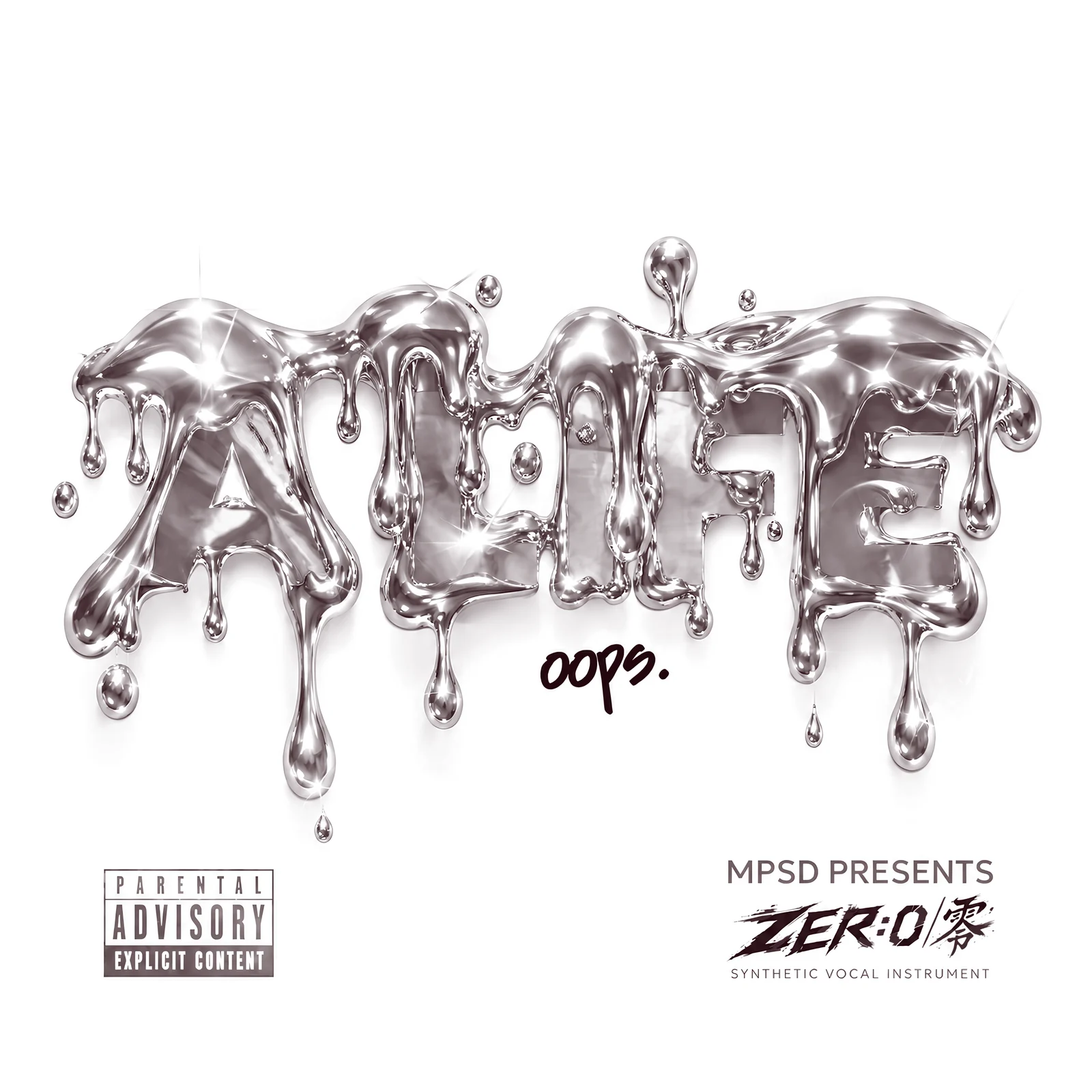
I develop the characters and direct, select, and edit the artwork. Some images were made with generative tools. I designed the “ridiculous” cover in Canva.
The craft
A lot happens between the versions.
Open a part of the process. Take it at your own pace.
01Songwriting+
A song usually starts with the part that won’t leave me alone: a sentence, a joke I probably shouldn’t make, an image, a contradiction, or the line I keep hearing while I’m trying to do something else.
Then I work it into structure: hooks, repetition, tension, payoff, voice. Having feelings isn’t the same as writing a song. The craft is in translating those feelings into something another person can enter and remember.
I had a story to tell. The lyrics were how I learned to tell it.
02Synthetic Vocal Production+
Directing the voice meant listening for intent: where it should hesitate, where it should bite, and whether the delivery sounded like it believed the lyric.
Using Suno, I first had to shape the core voice. That took more trials and experiments than the finished records make obvious. The voice heard across Act I wasn’t a preset I found. It was something I kept pushing, then mutating over time into what you hear by Act III.
Some songs almost didn’t make the cut because I couldn’t get the inflection right, the phrasing wasn’t landing, or one instrument sat just a little wrong. A take could be technically usable and I would still know immediately that it wasn’t the song.
I hand-picked every difference you hear.
03Character Development+
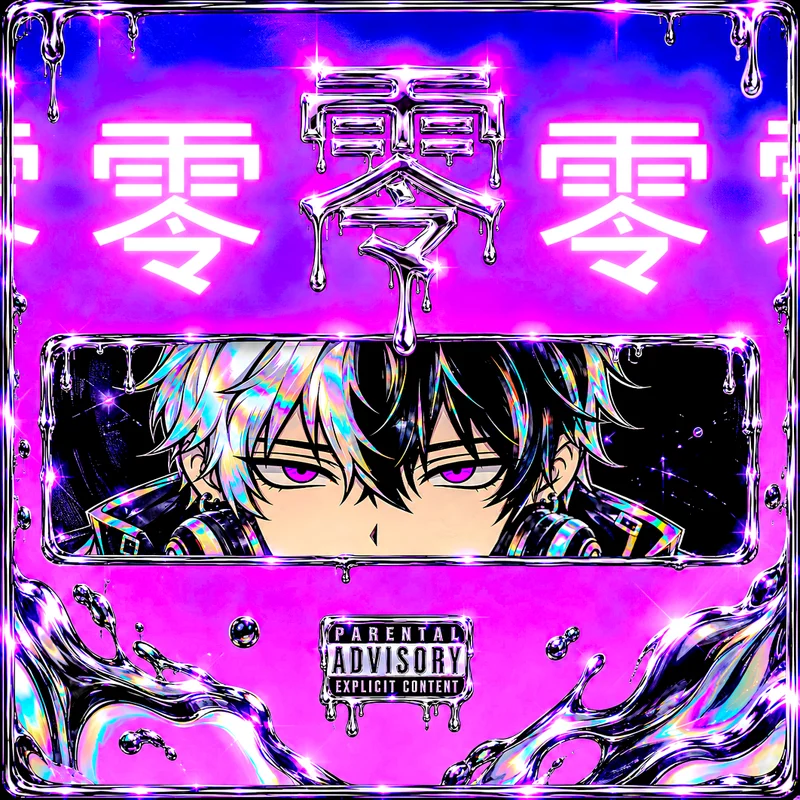
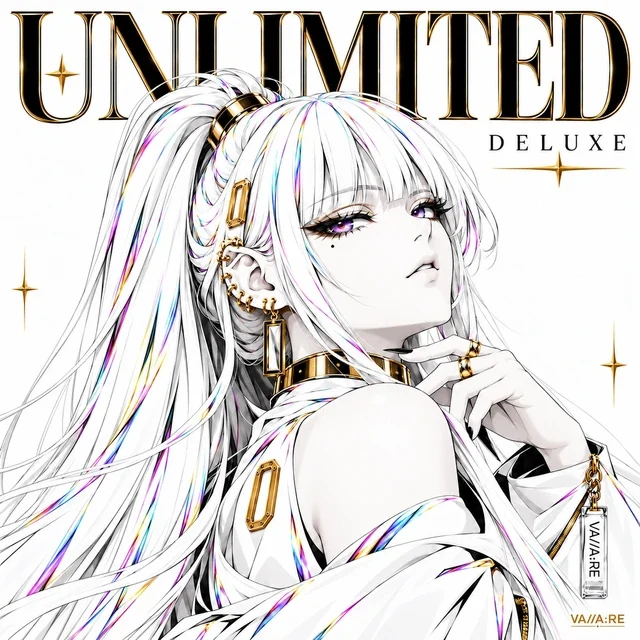
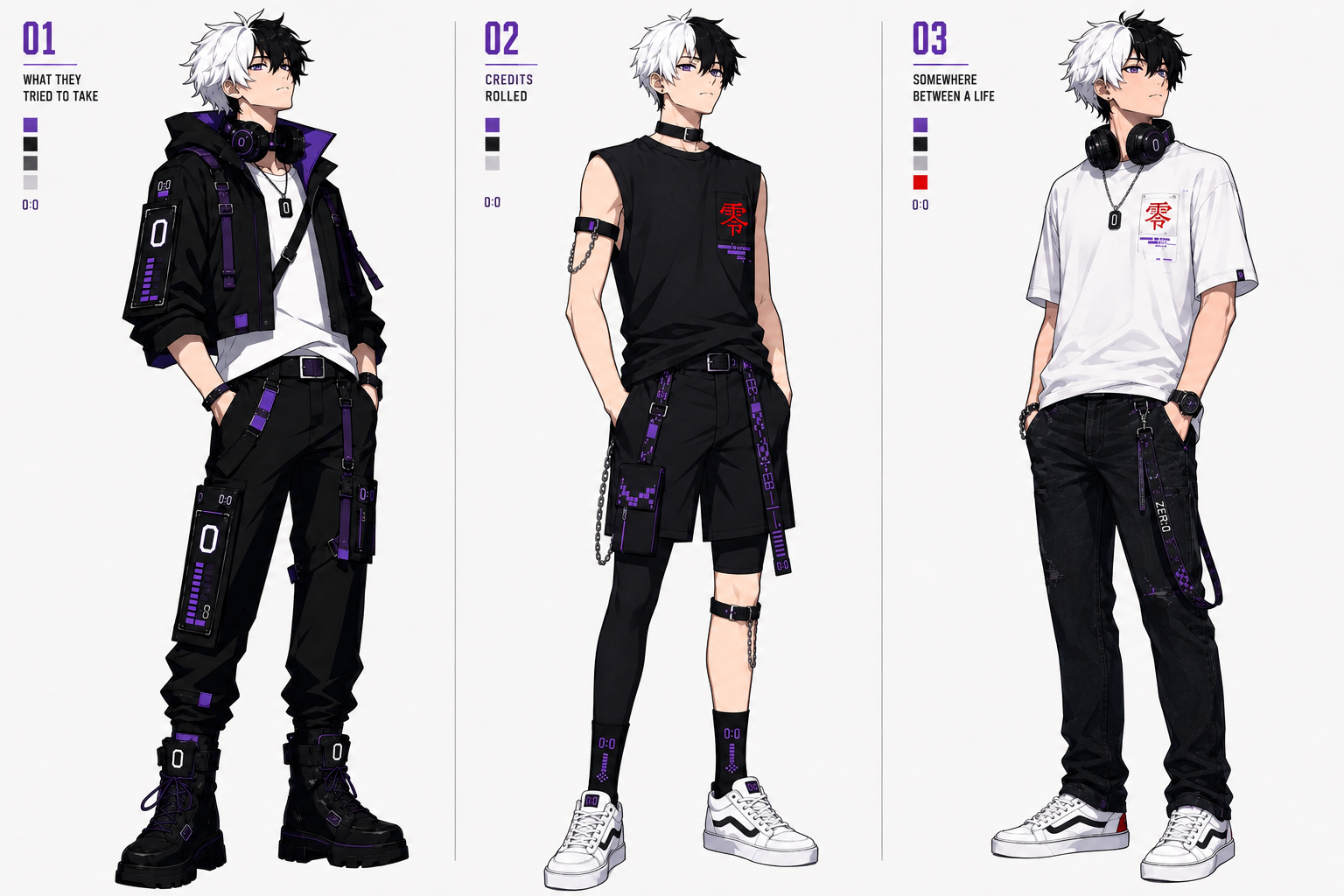
The designs took the same kind of work. I made character bibles for ZER:0 and VA//A:RE, gave them personas, and kept working the details until each one had an identity you could recognize across different poses, clothes, expressions, and rendering styles.
The sound helped shape the characters, and the characters changed how I directed the sound. A harder delivery could reveal something about ZER:0’s posture. A visual detail could make me hear a line differently. They grew by talking back to the music and to each other.
Neither character is a puzzle the listener has to solve. They’re vessels — fragmented parts of my life made cohesive enough to carry a narrative I couldn’t carry by speaking plainly.
04Visual Evolution+
The anime-like language is personal. I grew up exposed to Japanese culture and fell in love with the way anime, games, music, and design could build a complete world around a feeling. That visual vocabulary stayed with me.
It was never one style to copy or decoration I pasted on afterward. I pulled together all kinds of odds and ends (childhood influences, hyper-pop color, metal abrasion, character design, editorial typography, glitches, fashion, and whatever else the story needed) and curated them into one show.
The covers and character designs changed together. I kept enough shared details for continuity while letting each act have a different emotional weight.
I didn’t force the releases to wear the same uniform. They belong together because of the story. The differences are the system, because the work changed when I did.
05Artwork Iterations+
There were alternatives, rejections, near-misses, and covers that looked good but still felt wrong. Looking finished and belonging to the song aren’t the same thing.
I tested scale, thumbnail legibility, release dimensions, color, character pose, and whether the image held the same emotional pressure as the track. If one of those failed, the fact that the piece was technically polished didn’t save it.
The gallery keeps that evolution visible. It isn’t a victory lap of perfect finals. It’s the trail of decisions that taught me what ZER:0 could look like.
06Typography+
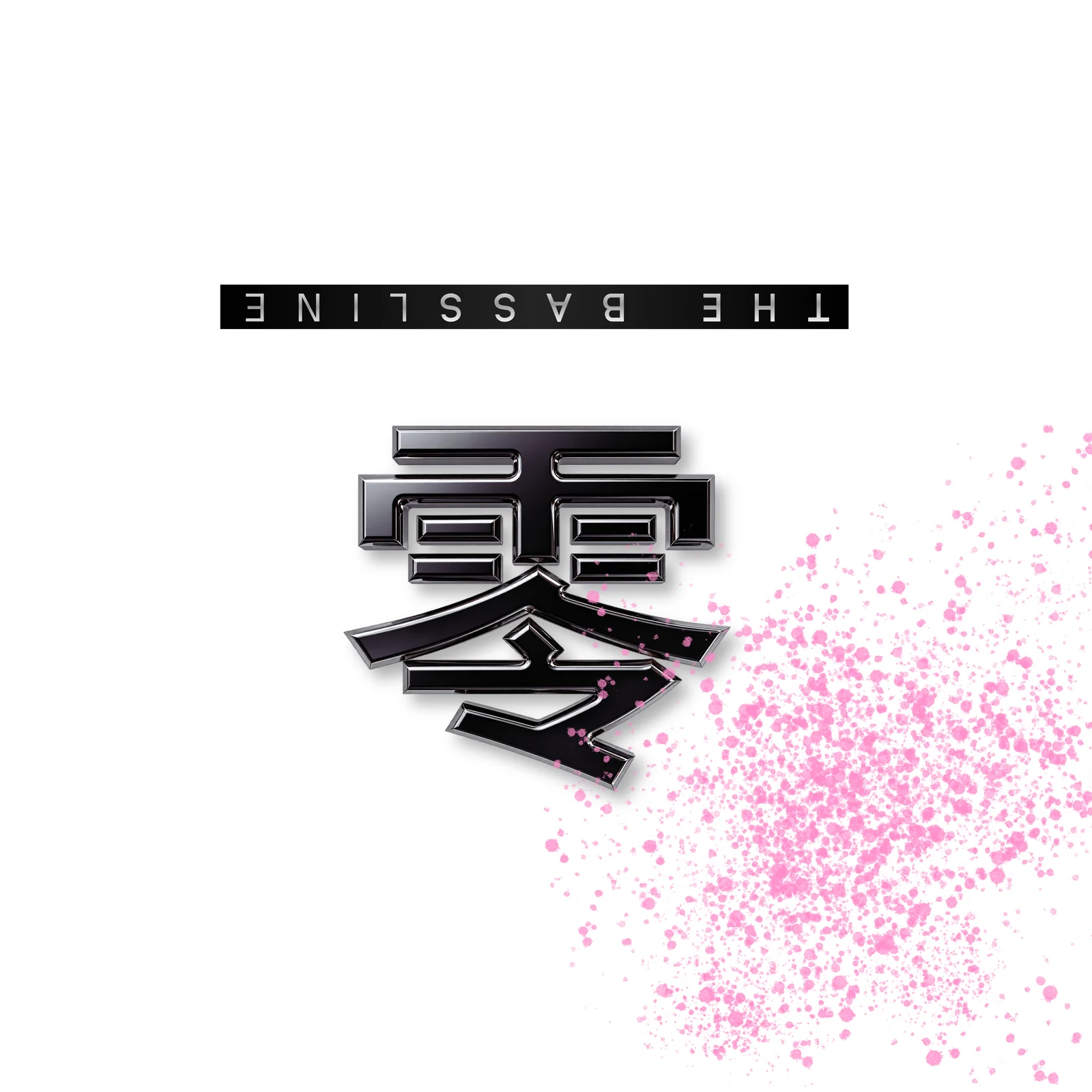
Sometimes type is the image. THE FULL STORY works because the color lives inside the letters while the page around it stays almost aggressively white. CREDITS ROLLED works because the 零 refuses to behave like a polite logo.
Scale, spacing, distortion, and direction let words carry pressure before anyone reads their meaning. I use legibility as a threshold, not an excuse to make everything calm.
The typography still has a job. A first-time viewer needs to know what the work is called, where they are, and what matters next. Expressive type only works when the hierarchy survives it.
My mother helped shape the creative direction, listened to every track, approved the songs, and picked the cover. Her co-producer credit reflects that involvement.
My sister inspired VA//A:RE’s aesthetic and attitude. The character has a voice of her own, with real people behind the choices.
I got proud of this one because I could see me a little more in it. That feeling matters to the writing: hearing more of my own words and personality come through.
The sequencing work included comparing lyrics, production directions, and the spacing of cowbell-heavy tracks. An album takes shape between its songs as well as inside them.
ZER:0 across Acts I, II, and III. The familiar details stay as the armor comes off.
The characters
The sound gives them a shape.
ZER:0 and VA//A:RE each have a character bible. Their sound influenced how I designed them, and the designs changed how I directed the sound.
The games ask what a song can feel like when you have to react to it.
The BASSVerse Pocket is a collection taking shape around song-based games. EDEN//BREAK† and Smoked’ and Mirrored are other worlds in progress. Each can develop in its own direction while sharing the music and characters that started it.
We want LGBTQIA+ adults in Austin to have a clearer path to safety, stability, and community—especially when homelessness, displacement, or housing instability makes the next step hard to find.
ATACO brings public resource information together in English and Spanish through a web guide and app. Our aim is to make it easier to find where to start for housing, food, health care, transportation, legal help, and community support, with no ATACO account required to browse.